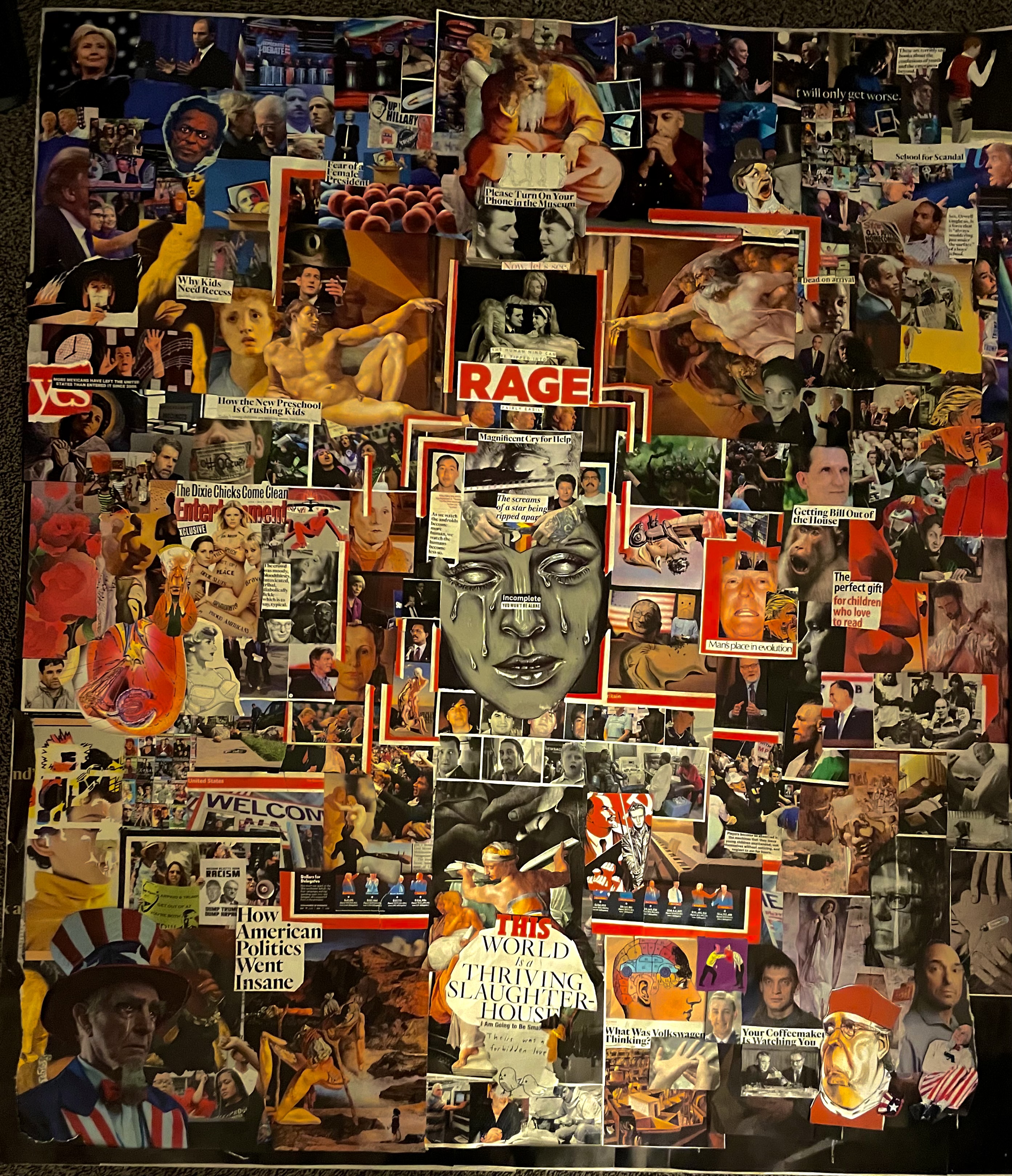
RAGE
A visceral exploration of American anger, layering political imagery, classical art, and media fragments to examine how rage functions as both destructive force and catalyst for change in contemporary society.
Explore the Layers
Click on different areas to uncover hidden meanings and artistic choices
Political Theater
Politicians and media figures create spectacle while systems crumble
The Heart of Rage
Central "RAGE" text with classical art fragments
Information Warfare
Headlines, news clips, and manufactured outrage
Institutional Harm
Images revealing how systems harm the vulnerable
Capitalist Spectacle
Corporate logos, advertisements, and consumption imagery
Cyclical History
Historical figures and events that mirror present crises
RAGE Collection Series
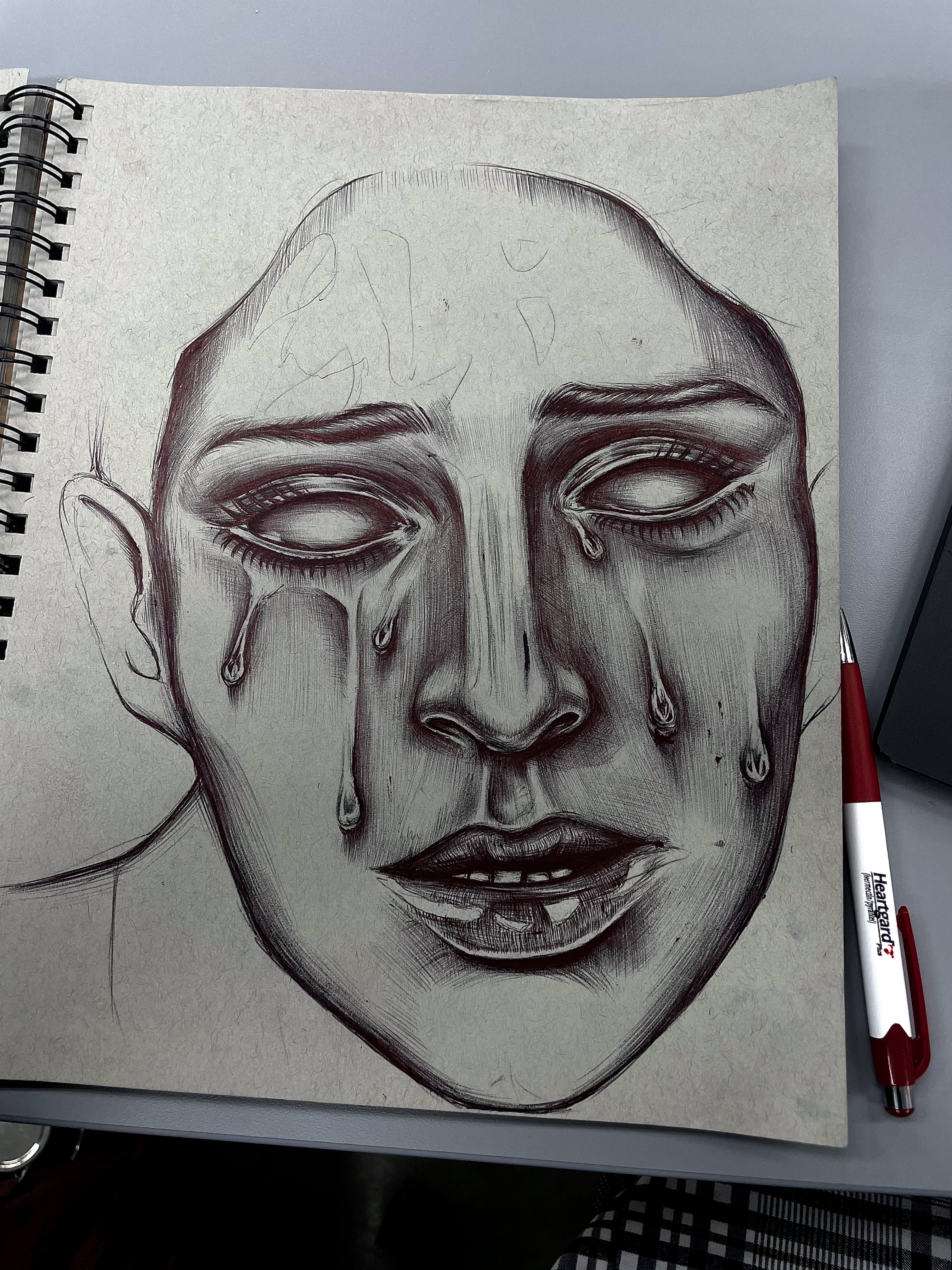
Institutional Breakdown
Focusing on educational and healthcare system failures
Media Saturation
Information overload and attention economy
Economic Violence
How financial systems create and exploit desperation
Archaeology of Anger
How rage becomes art through methodical deconstruction and reconstruction
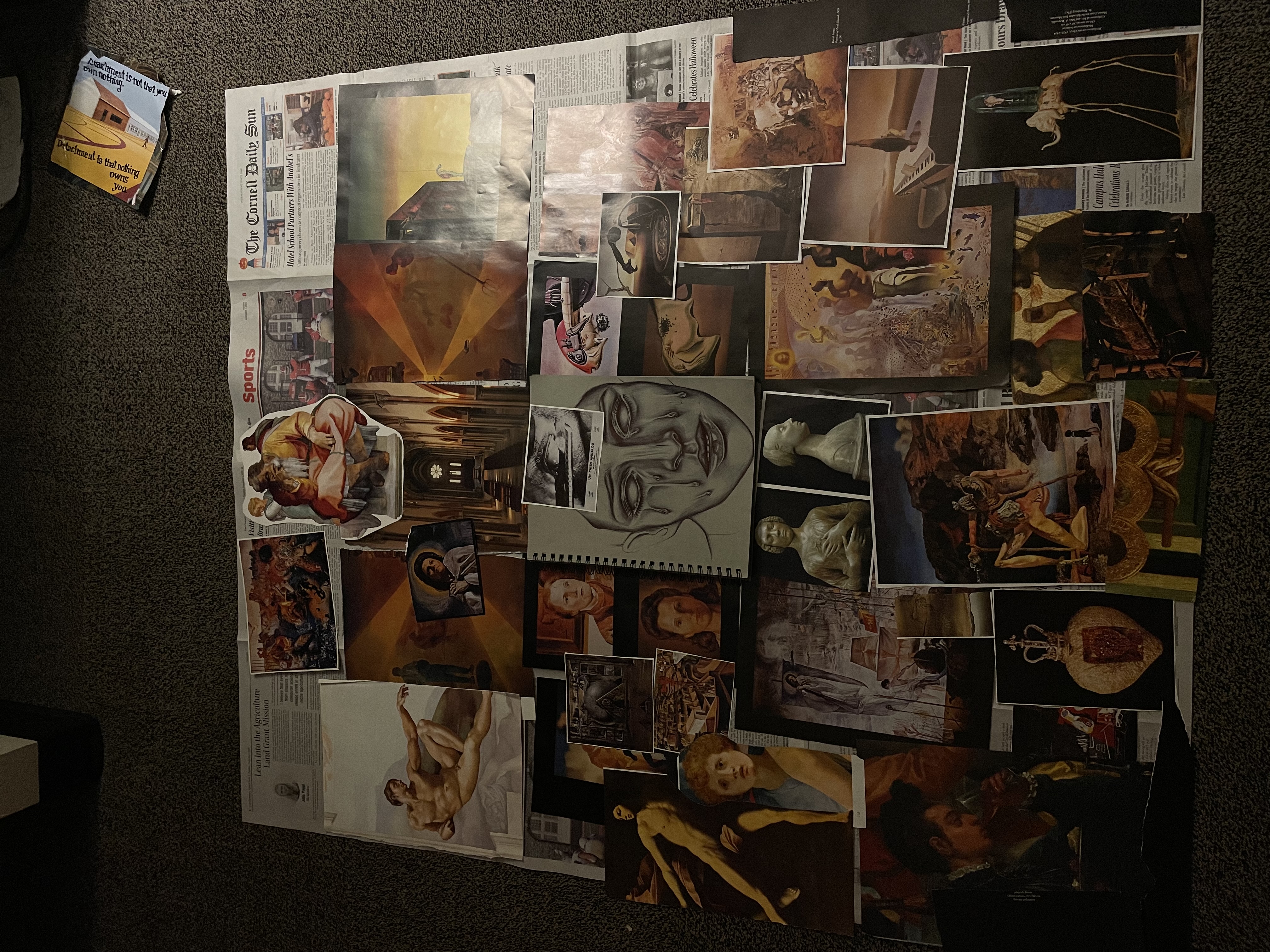
Material Archaeology
Collecting fragments from magazines, newspapers, and digital prints spanning 2020-2024
Materials & Techniques:
Like an archaeologist of the present moment, gathering evidence of societal breakdown from multiple media sources.
Emotional Cartography
Arranging elements by emotional intensity rather than logical narrative
Materials & Techniques:
Creating zones of feeling - areas where anger builds, peaks, and transforms into different emotional states.
Meaning Archaeology
Building layers where different time periods and contexts intersect
Materials & Techniques:
Each layer reveals new meanings - what appears as chaos on the surface contains deliberate patterns of critique.
Synthesis of Rage
Integrating all elements into a cohesive statement about American anger
Materials & Techniques:
The final piece becomes a mirror - viewers see their own relationship to rage reflected back.
On Rage as Raw Material
Rage is perhaps the most honest emotion in American politics today. It cuts through pretense, reveals true priorities, and strips away the comfortable myths we tell ourselves about progress and civility. But rage is also dangerous - it can be manufactured, weaponized, and directed toward the wrong targets.
This collage excavates the visual language of contemporary American anger. By layering political theater with classical beauty, media manipulation with genuine suffering, I'm asking: What is legitimate rage versus manufactured outrage? When does anger become a tool of oppression versus liberation?
The process itself mirrors how rage functions - collecting fragments, building intensity, creating explosive moments where disparate elements collide. The viewer must navigate this emotional landscape just as we navigate the daily bombardment of images designed to provoke reaction.
Indigenous futurism asks us to imagine beyond the cycles that have trapped us. Perhaps rage, properly understood and channeled, becomes the energy needed to break free from systems that no longer serve life. But first, we must understand what we're really angry about.
— On the necessity of difficult emotions, 2024